
Planning a vaginal birth after a previous caesarean comes with a unique set of decisions that a standard birth plan does not cover. You are navigating monitoring requirements, knowing when to shift to a repeat caesarean, and communicating clearly with a team that needs to be prepared for both outcomes.
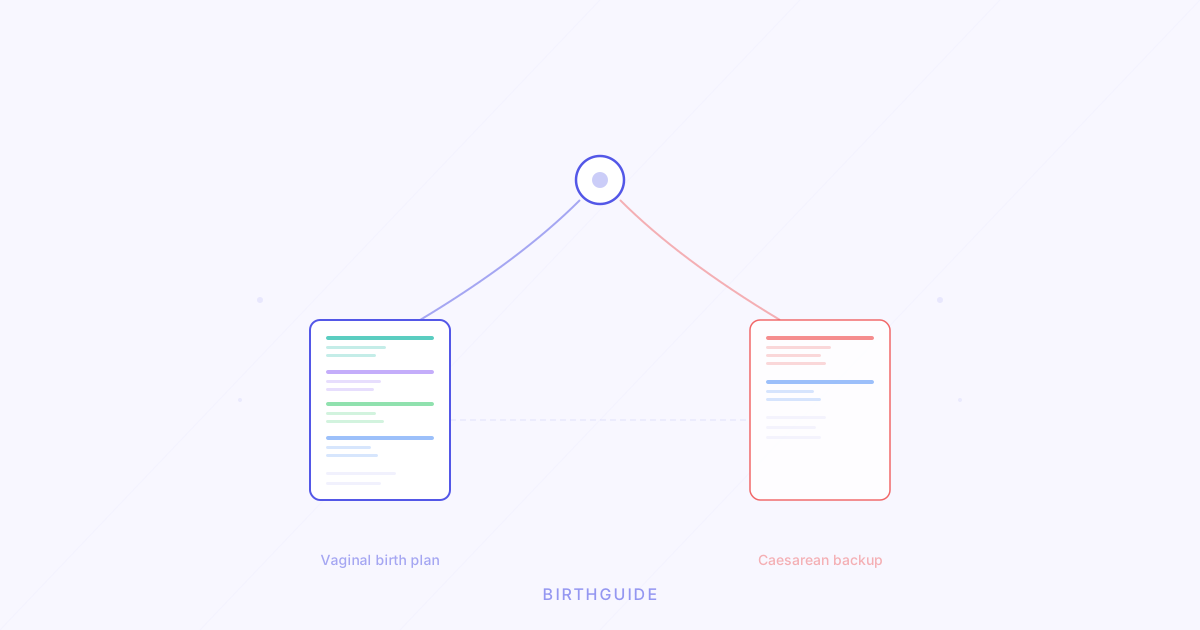
A VBAC birth plan is not just a vaginal birth plan with a caesarean backup. It is a document that acknowledges both pathways and gives your care team clear guidance on your priorities for each.
The numbers worth knowing
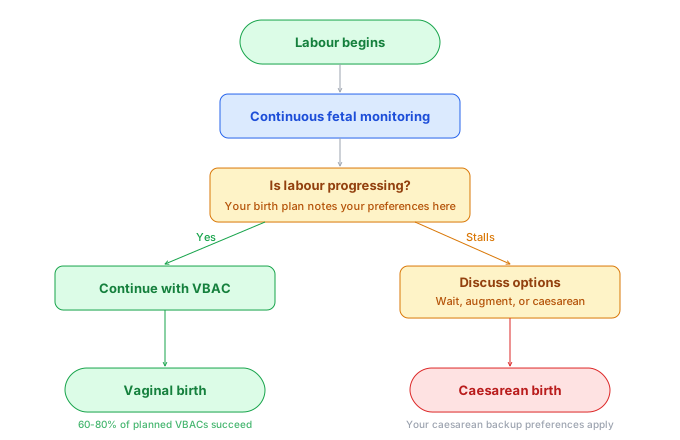
If you have had one previous uncomplicated caesarean and choose to plan a vaginal birth, you have a 60 to 80 per cent chance of achieving it. If you have also had a previous vaginal birth, that number climbs to 87 to 91 per cent. Three out of four women who plan a VBAC will have one. These figures come from RANZCOG (Royal Australian and New Zealand College of Obstetricians and Gynaecologists) clinical guidelines, which are used by Australian hospitals to guide VBAC care.
Those are strong odds. But the remaining cases mean your plan needs to account for both paths, and your birth team needs to know your preferences for each.
What makes a VBAC birth plan different
A standard birth plan covers your preferences for labour, pushing, pain relief, and baby's first moments. A VBAC birth plan covers all of that, plus three additional areas specific to your situation.
Monitoring during labour
Most Australian hospitals require continuous fetal monitoring (CTG) for VBAC labours. This is because the main risk, uterine scar rupture, typically shows up first as changes in the baby's heart rate. Continuous monitoring gives the team the earliest possible warning.
This does not necessarily mean you are stuck on your back in bed. Some hospitals have wireless or waterproof CTG monitors that allow more movement. Ask your hospital what monitoring equipment they have available, and if wireless monitoring matters to you, mention it in the notes section of your birth plan.
If continuous monitoring is not something you want, that is a conversation to have with your obstetrician well before labour. Some private hospitals and birth centres may have more flexibility, but public hospital protocols are generally firm on this for VBAC.
What happens if labour stalls
One of the specific considerations in a VBAC is how to respond if labour is not progressing. The options include:
- Augmentation with oxytocin: this can help labour progress, though RANZCOG notes a slightly increased risk of uterine scar complications with augmented labour compared to spontaneous labour. Your obstetrician can talk you through the evidence for your specific situation
- Waiting: sometimes labour slows and restarts on its own. Your team will assess whether waiting is safe based on how you and baby are doing
- Moving to a caesarean: if augmentation is not appropriate or labour is not progressing despite it, a repeat caesarean becomes the recommendation
Your birth plan should note your preferences here. Some parents want to try augmentation before moving to a caesarean. Others prefer to go straight to a caesarean if labour stalls significantly. There is no wrong answer, but your team needs to know your thinking ahead of time.
When to move to a caesarean
This is the question most VBAC parents think about most. Your birth plan should include your preferences for when a caesarean becomes the right call. Common triggers include:
- Fetal heart rate changes that suggest the scar is under stress
- Labour not progressing despite augmentation
- Your own feeling that you have reached a point where you would prefer surgery
That last one matters. You can change your mind during labour, and your plan can say that. Something like “If I request a caesarean during labour, please discuss options with me first, but respect my decision” gives your team a framework.
Your caesarean backup plan
This is where most VBAC birth plans fall short. They cover the vaginal path in detail and then have a single line saying “if a caesarean is needed, follow standard procedures.” That is not enough.
If you end up having a caesarean, you still have preferences about drape options, skin-to-skin in theatre, delayed cord clamping, who is in the operating room, and how the first moments unfold. Write these down as a separate section of your plan. Your team should be able to flip to it and immediately know what you want.
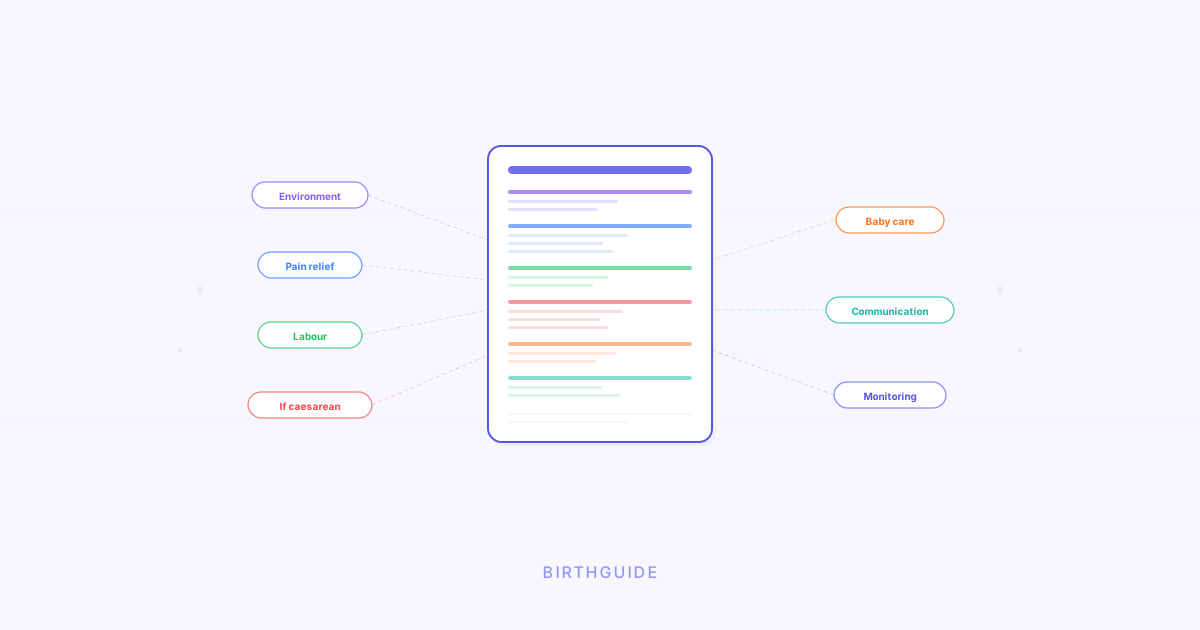
BirthGuide generates both pathways in a single document. When you select vaginal birth after a previous caesarean, the questionnaire automatically adds VBAC-specific questions about monitoring, augmentation, and when to move to a caesarean. Your VBAC preferences and your caesarean backup appear side by side, colour-coded so the team can find the right section in seconds.
What else to include
Beyond the VBAC-specific sections, your plan should cover the same ground as any birth plan.
Pain relief preferences
Many VBAC parents want to avoid an epidural early in labour because being mobile can help labour progress and gives clearer signals about how the scar is handling contractions. Others want an epidural available from the start. Note your preference and whether you would like the team to offer pain relief or wait until you ask.
Other options to include: gas (nitrous oxide), sterile water injections, TENS machine, shower or bath access, and any positions you would like to try.
Labour environment
Dim lighting, music, limiting the number of people in the room, aromatherapy, and keeping the space calm are all reasonable requests. The fact that you are having a VBAC does not change your right to a comfortable labour environment.
Third stage and baby care
Delayed cord clamping, skin-to-skin, feeding preferences, vitamin K, and who stays with baby if you are separated. These are the same as any birth plan, but worth including so nothing gets missed in the transition if the birth moves quickly.
Your previous birth
A brief note about your previous caesarean gives context to any new team members who might not have read your full history. One or two lines is enough: when it happened, why (breech, failure to progress, emergency), and whether there were any complications. This is not about reliving the experience. It is about giving your team useful clinical context.
Talking to your care team about VBAC
The most important conversation happens well before labour starts. At an antenatal appointment around 34 to 36 weeks, go through your birth plan with your obstetrician or midwife. Key questions to ask:
- Does this hospital support VBAC? (Most Australian public hospitals do. Some private hospitals are more restrictive)
- What monitoring will be required?
- What is the hospital's approach to augmentation for VBAC?
- If I need a caesarean during labour, how quickly can the team mobilise?
- Can I see the operating theatre beforehand? (Some hospitals offer this for planned caesareans and VBAC patients)
Your partner should be at this appointment. During labour, they are the one who will remind the team about your preferences and help make decisions if things move quickly.
The emotional side
Planning a VBAC often carries emotions from your previous birth. If your first caesarean was unplanned or traumatic, writing a VBAC birth plan can bring up feelings you were not expecting. That is normal.
Some parents find it helpful to include a short statement at the top of their plan acknowledging this. Something like: “My previous birth was an emergency caesarean. A positive birth experience is important to me this time, whatever form it takes. Please keep me informed and involved in all decisions.” This gives your team an immediate sense of what matters to you emotionally, not just clinically.
If your previous birth experience is affecting your mental health, talk to your GP or midwife. They can refer you to a perinatal mental health service. In Australia, PANDA (Perinatal Anxiety and Depression Australia) offers a national helpline on 1300 726 306.
Create your VBAC birth plan
BirthGuide's questionnaire includes a dedicated VBAC pathway. If you have had a previous caesarean and choose vaginal birth, it automatically adds questions about monitoring preferences, augmentation, and when to shift to a caesarean. It generates both your VBAC preferences and your caesarean backup in a single, colour-coded document your care team can scan in seconds. Your partner gets a cheat sheet for active labour too.
Create your birth plan