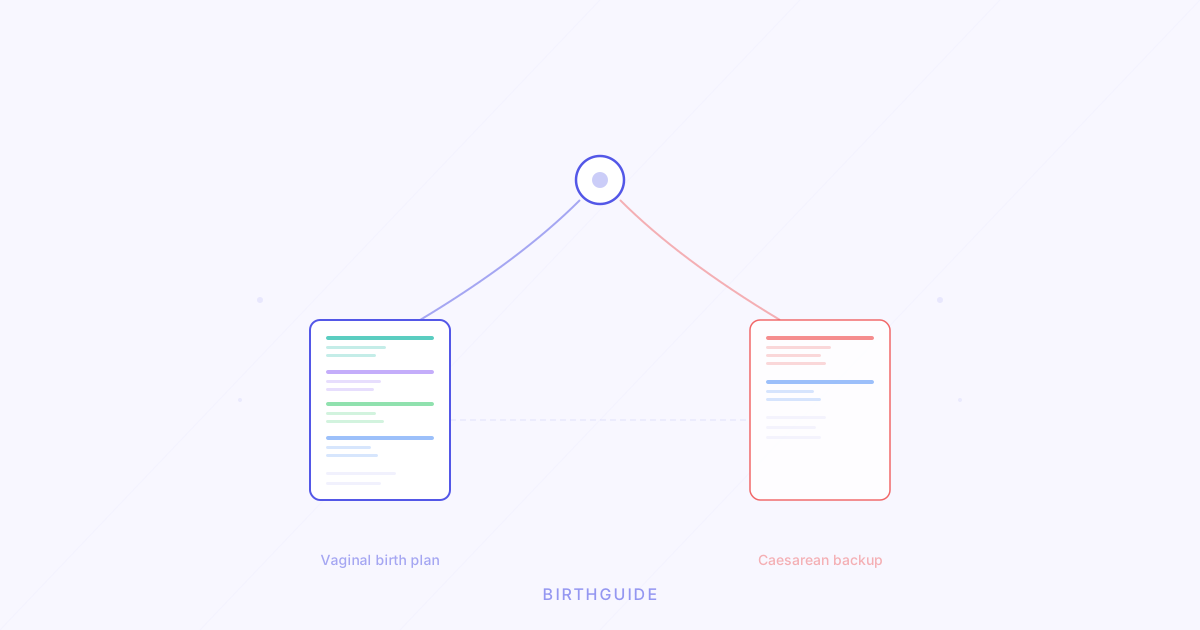

Yes, you can write a birth plan for a caesarean. A caesarean birth plan records your preferences for the operating theatre, how your baby is born, skin-to-skin contact, and the first moments afterwards. In an Australian hospital you usually still have a say over who is present, the drape, music, cord clamping, and who holds your baby first. A short list of preferences covers:
- Who is with you in theatre
- The drape: standard, lowered, or clear
- Music and how much the team talks you through it
- Skin-to-skin and who holds your baby first
- Delayed cord clamping
- What you want if the plan changes
A caesarean birth is still your birth. Whether it is planned from the start or became the right call during pregnancy, you get to have preferences about how it happens. And writing them down means your surgical team, your midwife, and your partner all know what matters to you before the day arrives.
Most birth plan templates focus on vaginal birth and tack caesarean on as an afterthought. That is not helpful if a caesarean is your actual plan. You need a document that covers what happens in theatre, how your baby arrives, and what the first moments look like for your family.
Here is how to write one that works in an Australian hospital.
Do you need a birth plan for a caesarean?
Yes. Even a planned caesarean leaves room for your choices, so a birth plan is worth writing. There is a common misconception that planned caesareans are so structured there is nothing left to decide. That is not true. Australian midwifery research has found that women who used a caesarean birth plan felt more able to communicate their preferences and felt a greater sense of control over their birth experience.
You still get choices about who is in the room, what you see and hear, how your baby is placed on your skin, and how those first minutes unfold. Putting them in writing means the team can prepare for your preferences rather than guessing on the day.
What should you put in a caesarean birth plan?
A caesarean birth plan should cover who is in theatre, the environment, the drape, skin-to-skin, cord clamping, and the first moments with your baby. Keep each preference short. The sections below walk through the choices most Australian hospitals can support.
Who is in the operating theatre
Most Australian hospitals allow one support person in theatre, and some allow two. Your partner is the obvious choice, but if you also have a doula or a family member you would like present, check your hospital's policy early, as it can differ between public and private hospitals.
Worth noting: some hospitals require your support person to leave briefly during the spinal anaesthetic. This is standard and usually only takes a few minutes.
The environment
Theatre does not have to feel clinical and cold. You can request:
- Music playing during the birth (bring a playlist on your phone or a small Bluetooth speaker)
- Surgical narration from your obstetrician, so you know what is happening step by step. Some parents love this; others prefer to hear only the key moments, like “baby is almost here.” Neither is wrong
- A warmer theatre temperature (within safe limits) for when baby arrives
Drape preferences
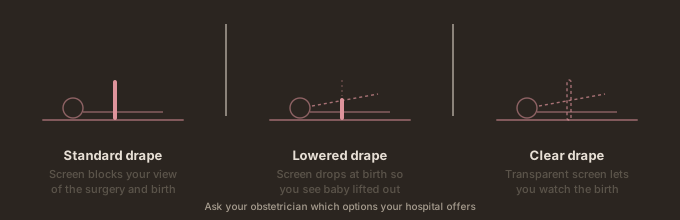
This is one of the biggest choices in a caesarean birth plan, and one many parents do not know they have. The standard setup is a screen at chest height so you cannot see the surgery. But many Australian hospitals now offer a lowered or clear drape option, where the screen is adjusted at the moment of birth so you can see your baby being lifted out.

| Drape | What you see | Availability in Australia |
|---|---|---|
| Standard | Screen stays up at chest height, so you do not see the surgery or the moment of birth | Routine in every hospital |
| Lowered | Screen is dropped at the moment of birth so you watch your baby being lifted out, then raised again | Offered by many hospitals; ask in advance |
| Clear | A see-through panel lets you watch the birth itself without seeing the surgical field | Less common; depends on the hospital and your obstetrician |
Not all hospitals offer this, and your obstetrician may have a preference based on your specific circumstances. But it is worth asking. Many parents who chose a lowered or clear drape say it made the birth feel more real and connected.
Skin-to-skin in theatre
Immediate skin-to-skin contact after a caesarean is increasingly standard in Australian hospitals, but it is not guaranteed. You can request:
- Baby placed on your chest as soon as they are checked and stable
- Your partner doing skin-to-skin if you are unable to (due to nausea, shaking, or if you need both arms free)
- A specific side of your chest (some parents have a preference based on where the IV line is)
If this is a repeat caesarean, you can also note whether you would like the surgical team to use your existing scar rather than making a new incision. This is usually the plan, but worth confirming in your birth preferences.
Delayed cord clamping
Delayed cord clamping is now recommended by Australian guidelines for both vaginal and caesarean births. Most obstetricians will do this routinely, but if it is important to you, include it in your plan. If you are planning cord blood banking, note this too so the team can coordinate.
Finding out baby's sex
If you have chosen not to find out your baby's sex before the birth, note who you would like to announce it. In a caesarean, the surgical team often sees the baby before you do, especially with a standard drape. Specifying “we would like to discover baby's sex ourselves” or “partner to announce” avoids someone accidentally sharing the surprise.
Photos and video
Some hospitals allow photography in theatre (not during the surgery itself, but at the moment of birth and after). Video policies vary. Check with your hospital and note your preference in the plan.
What happens if the caesarean cannot proceed
This is rare, but if something changes and a vaginal birth becomes the recommendation, your birth plan should note your preferences for that scenario too. Would you want an epidural? Do you have any preferences about monitoring or positions? Even a brief note gives your team something to work with. If you have had a caesarean before and are preparing for a vaginal birth this time, our VBAC birth plan guide covers both pathways in one document.
Anything else for your surgical team
This is your space for anything personal. Common notes include:
- Anxiety about surgery or previous difficult experiences with anaesthesia
- A preference for the obstetrician to talk you through each stage
- Wanting to be told the sex of the baby yourself (rather than having someone else announce it)
- Requesting that non-essential conversation in theatre stays quiet during the birth moment
What should a caesarean birth plan look like?
Keep it to one page. Your surgical team will scan it quickly, often in the minutes before your procedure. A colour-coded, structured document works better than a long letter. Use clear headings and short statements rather than paragraphs.
If your partner will be with you in theatre, make sure they have read the plan and understand your priorities. In a caesarean, your partner is often the one who reminds the team about specific requests, especially in the busy minutes after baby arrives.
What is a gentle (family-centred) caesarean?
A gentle caesarean, also called a family-centred caesarean, is a planned caesarean run to feel less like surgery and more like a birth. The same idea covers lowered or clear drapes, immediate skin-to-skin, delayed cord clamping, music, and a calm theatre.
| Element | What to request | Typically available in Australia |
|---|---|---|
| Lowered or clear drape | Screen adjusted at birth so you see your baby arrive | Many hospitals; ask in advance |
| Skin-to-skin in theatre | Baby on your chest as soon as they are checked and stable | Increasingly standard |
| Delayed cord clamping | Wait before clamping the cord, even 30 to 60 seconds | Routine where clinically safe |
| Music | Your own playlist or calm music during the birth | Usually supported |
| Calm environment | Quiet talk during the birth moment, narration only if you want it | Usually supported |
Many Australian hospitals now support these preferences as standard practice. You do not need to use the term “gentle caesarean” in your plan. Just list what you want and your team will know what you mean.
When should you discuss your caesarean birth plan with your obstetrician?
Bring your caesarean birth plan to an antenatal appointment at least two to three weeks before your scheduled date. Your obstetrician can tell you which preferences they can support, flag anything that might not be possible given your specific medical circumstances, and make notes in your file.
This conversation also builds trust. When your team knows what matters to you, they are better positioned to advocate for you in theatre.
Create your caesarean birth plan
BirthGuide includes a dedicated caesarean pathway that covers theatre preferences, drape choices, skin-to-skin, cord clamping, and more. When you select planned caesarean, the questionnaire skips sections that do not apply to you (like pushing positions and labour environment) and asks caesarean-specific questions instead. It generates a one-page, colour-coded document your surgical team can scan in seconds.
Create your birth planCommon questions
- Can I have a birth plan for a caesarean?
- Yes. A caesarean birth plan covers your preferences for the operating theatre, how your baby arrives, skin-to-skin contact, and the first moments after birth. Australian research supports their use for improving communication with your surgical team.
- How many support people can I have in theatre?
- Most Australian hospitals allow one support person, and some allow two. Check your hospital's policy during your antenatal visits, as it varies between public and private facilities.
- Can I have skin-to-skin during a caesarean?
- In most Australian hospitals, yes. Immediate skin-to-skin in theatre is increasingly standard. If you are unable to hold baby straight away, your partner can do skin-to-skin instead. Include this preference in your birth plan so the team is prepared.
- What is a gentle caesarean?
- A gentle or family-centred caesarean includes elements like lowered drapes, immediate skin-to-skin, delayed cord clamping, and music in the operating theatre. Many Australian hospitals now support these preferences. You do not need to use the specific term in your plan.
- Should I discuss my caesarean birth plan with my obstetrician?
- Yes. Bring it to an antenatal appointment at least two to three weeks before your scheduled date. Your obstetrician can confirm which preferences are supported and note them in your file.
- What is the difference between a planned and emergency caesarean birth plan?
- A planned caesarean birth plan is written in advance and can cover theatre setup, drape, music, skin-to-skin, and cord clamping in detail. An emergency caesarean happens when labour changes course, so a good birth plan simply adds a short "if I need a caesarean" section to your vaginal birth preferences, noting who you want present and that you still want skin-to-skin and delayed cord clamping if possible.
- Can I have a doula in theatre for a caesarean?
- It depends on the hospital. Most Australian hospitals allow one support person in theatre and some allow two, so whether a doula can join your partner varies between facilities. Ask your hospital early, as policies differ between public and private services.
- Can I breastfeed in the operating theatre after a caesarean?
- Often, yes. If you are well and your baby is stable, many Australian hospitals support an early first feed in theatre or in recovery, sometimes with a midwife helping you position your baby. Note it in your birth plan so the team can help you start when you are ready.