
If this is your first baby, everything about birth is new. You do not know what labour feels like, how long it takes, what the hospital room looks like, or how your body will respond. That is exactly why a birth plan matters more for first-time parents than for anyone else.
A birth plan is not about predicting what will happen. It is about making decisions now, while you have time to research and think, so you are not making them for the first time mid-contraction with a midwife you have never met standing beside you.
This guide covers what first-time parents in Australia often wish they had known before writing their birth plan, what is already standard practice at most hospitals (so you do not need to request it), and the preferences that genuinely need to be written down because they will not happen unless you ask.
What is already standard care in most Australian hospitals
One of the most useful things a first-time parent can learn is what happens automatically. These practices are routine in most public and private hospitals across Australia, which means you do not strictly need to include them in your birth plan. Some parents include them anyway for clarity, and that is fine. But they should not be the focus of your plan.
Delayed cord clamping is now standard practice in most Australian hospitals. Your midwife will typically wait at least one to three minutes before clamping the cord, or until it stops pulsating. You can include this in your birth plan, but it is likely to happen regardless.
Skin-to-skin contact immediately after a vaginal birth is routine. If you and your baby are both well, baby will be placed on your chest straight away. For caesarean births, skin-to-skin is increasingly offered in theatre or recovery, though it is not as universal.
Informed consent before procedures. Your care team should explain what they are doing and why before any intervention. This is your legal right, not a preference.
Breastfeeding support. Midwives will support your first feed, usually within the first hour after birth. Lactation consultants are available in most hospitals. If you choose to formula feed, that is equally supported, though you may need to be clear about it since breastfeeding is promoted as the default.
Vitamin K and hepatitis B vaccination are offered to all newborns, and the hospital will ask for your written consent before administering either.
Knowing what is standard helps you focus your birth plan on the things that actually need to be communicated.
What you need to ask for (because it will not happen automatically)
These are the preferences that make a real difference and that most first-time parents only learn about after the fact.
“Do not offer me pain relief. I will ask for it if I need it.”
This is the single most impactful line you can put in a birth plan if you want to manage labour without pharmacological pain relief. Without it, staff may offer gas, pethidine, or an epidural during intense moments. The offer itself can undermine your confidence and pull you out of your coping zone. Requesting that pain relief is available but not offered keeps the decision in your hands.
If you want an epidural from the start, that is equally valid. Write it down. The point is to state your preference clearly rather than leaving it to the moment.
Your environment preferences
First-time parents often assume the hospital controls the atmosphere in the birth room. It does not. You can request dim lighting, play your own music, bring aromatherapy (check your hospital's policy), ask for quiet voices, close the door, and limit the number of people in the room. These are not luxury requests. The environment directly affects how your body produces oxytocin, the hormone that drives labour.
If you have done hypnobirthing or calmbirth preparation, your environment preferences will be more detailed. But even without formal preparation, specifying “dim lighting, quiet, door closed” makes a measurable difference.
Your preferred positions for labour and pushing
Many first-time parents assume they will give birth lying on their back because that is what they have seen on television. In reality, upright positions (standing, squatting, kneeling, on all fours) and side-lying are all options, and many are better for the progress of labour. Water birth is available at some hospitals.
Your birth plan should note the positions you are interested in trying, and whether you want to be coached to push or prefer to follow your body's urges. “I would like to try upright positions and prefer not to be coached to push unless I ask for guidance” gives your midwife a clear starting point.
Intermittent vs continuous monitoring
For a low-risk first pregnancy with no complications, Australian guidelines support intermittent monitoring (a handheld doppler used at regular intervals). This lets you move freely between checks. Continuous electronic monitoring (a CTG belt) restricts movement and is associated with higher intervention rates in low-risk pregnancies.
Some hospitals default to continuous monitoring regardless of risk level. If intermittent monitoring is important to you, include it in your birth plan and discuss it with your care team beforehand.
Who makes decisions if you cannot
Your birth plan should specify who your care team should consult if you are unable to make decisions yourself. For most parents this is their partner, but it is worth writing down explicitly. Also note whether you want interventions explained to you before they happen and whether you want time to discuss options with your partner before decisions are made.
Caesarean preferences
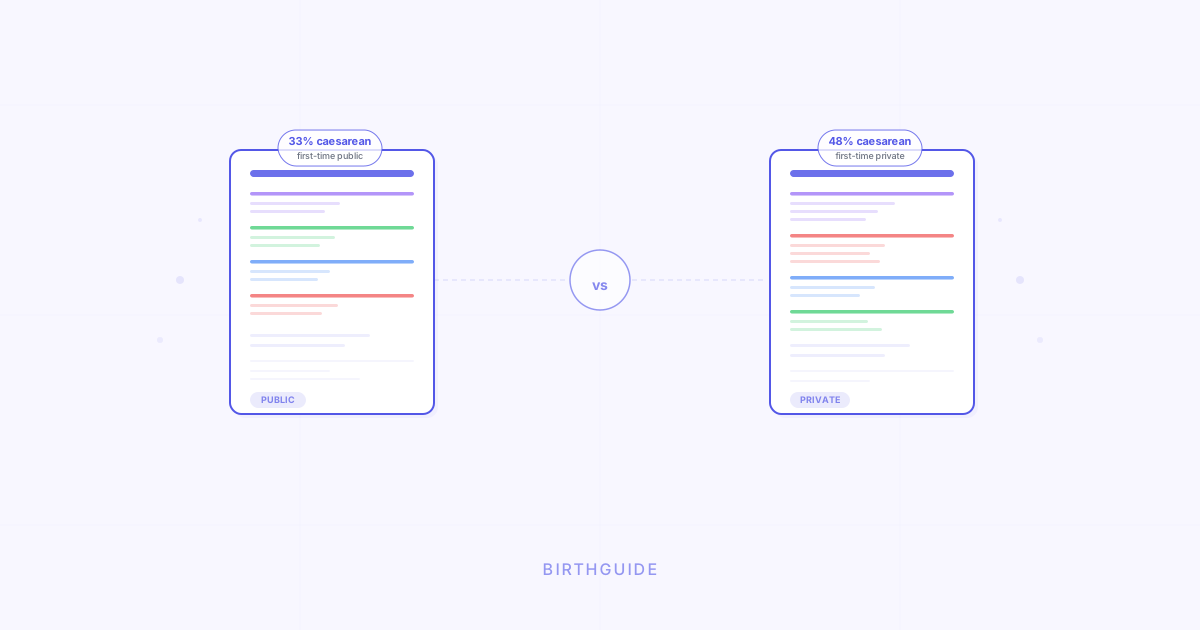
This is the section first-time parents most often skip, and the one they most often wish they had included. Around one in three Australian births are by caesarean. For first-time mothers, the rate is even higher. Having a caesarean section on your birth plan does not mean you are expecting one. It means you are prepared.
Cover who you want in theatre, drape preferences (standard, lowered, or clear), skin-to-skin in theatre, delayed cord clamping, and music. Our caesarean birth plan guide explains each option in detail.
What first-time parents consistently wish they had known
These insights come from Australian parent communities and from the clinical evidence around first births. They are not preferences to include in your plan. They are context that helps you write a better one.
Labour is usually longer for first babies. The average first labour is 12 to 14 hours, but it can be much longer. Some first labours take 24 hours or more. Your partner should pack for an overnight stay, and you should both be prepared for a long wait during early labour. Our hospital bag checklist covers what to pack for the full duration.
You might not know you are in labour at first. Early labour can feel like period cramps, lower back pain, or just a general sense that something is different. It can start and stop for hours or days. If you are unsure whether to go to the hospital, call the birth suite. They will talk you through it.
Induction is common for first-time mothers. According to AIHW data, 43% of first-time mothers in Australia had their labour induced in 2023. If induction is recommended for you, it does not mean something is wrong. It means your care team is making a clinical judgement about timing. Our induction birth plan guide covers what changes and what stays the same.
Your birth plan will probably not go exactly to plan. This is not a reason to skip writing one. It is the reason to include backup preferences. A birth plan that covers your ideal scenario and your caesarean backup means you have a voice regardless of how birth unfolds.
Your partner is the most important person in the room. Not because of what they do medically, but because they are the one who reads your birth plan when the midwife asks a question, who advocates for you when you cannot speak, and who reminds the team about your preferences in the busy minutes after birth. Make sure they have read the plan and understand it. BirthGuide generates a partner cheat sheet specifically for this purpose: a one-page summary of your key preferences that your partner can reference during active labour.
Questions to ask at your antenatal appointments
These questions will help you fill in the gaps in your birth plan with hospital-specific answers.
- What model of care am I in? (Midwifery Group Practice, shared care, standard public, private obstetrician.)
- What pain relief options are available at this hospital?
- Does this hospital have birth pools or wireless CTG monitors?
- How many support people can I have during labour and during a caesarean?
- What is the hospital's policy on eating and drinking during labour?
- What happens if I go past my due date?
- How quickly can the team mobilise for an emergency caesarean if needed?
- Is there a birth centre option, and am I eligible?
Write down the answers. They become the foundation of your birth plan.
Writing your first birth plan
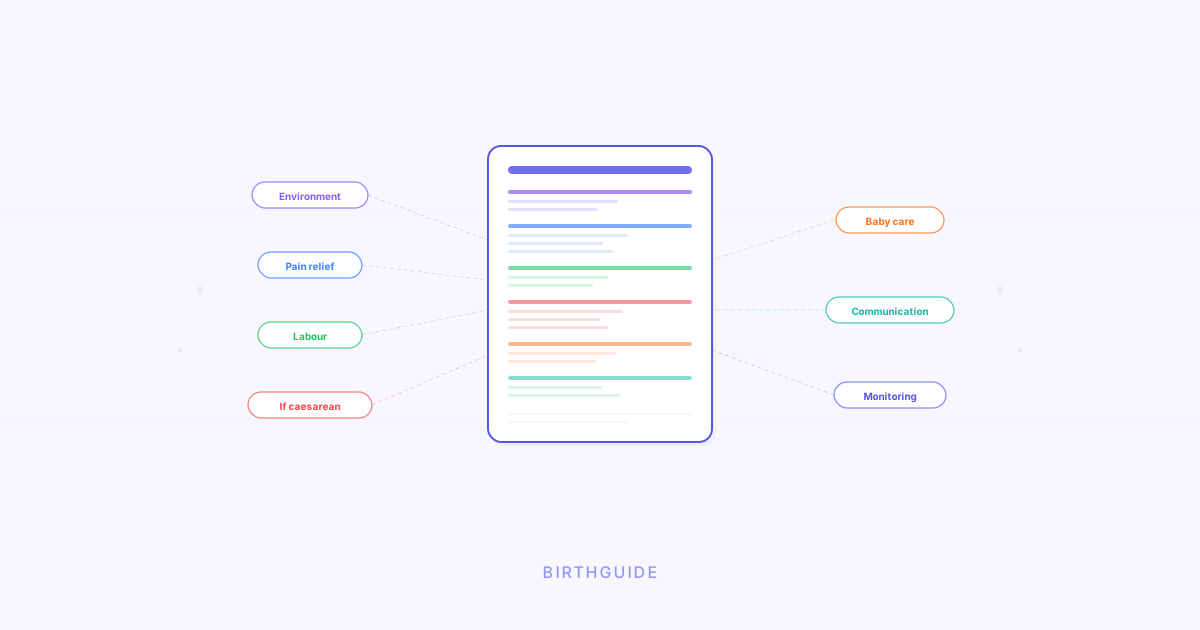
If this feels overwhelming, it does not need to be. A birth plan is one page. It covers your preferences for pain relief, environment, monitoring, pushing, what happens after baby arrives, and what you want if a caesarean becomes necessary. That is it.
Start with the decisions that matter most to you. If you feel strongly about not being offered pain relief, put that at the top. If having your partner involved in every decision is your priority, lead with that. The plan does not need to cover every possible scenario. It needs to cover the things you care about most.
For a full overview of what goes in each section, our complete birth plan guide covers everything in detail.
BirthGuide's questionnaire walks you through each section in minutes. It asks about pain management, environment, monitoring, pushing, baby care, and caesarean backup. It generates a one-page colour-coded document designed so your midwife can scan it in seconds, plus a partner cheat sheet for the delivery room and a personalised hospital bag checklist.
You do not need to have all the answers before you start. The questionnaire shows you the options that exist and lets you choose. That is often how first-time parents discover preferences they did not know they had.
Create your birth plan