
You track your steps. You track your sleep. You track your water, your calories, your screen time. When your baby arrives, you will want to track them too. Feeds, naps, nappies. All of it.
Your parents never did any of that. They did not have apps or spreadsheets or Bluetooth baby monitors. They learned to read their baby by watching, and within a few weeks, they just knew.
You will get there too. But here is what nobody tells you about those first weeks: you will have no idea what time it is. Three hours will pass and feel like thirty minutes. You will forget when the last feed started. You will not notice that your baby has been awake for over an hour until they are already crying.
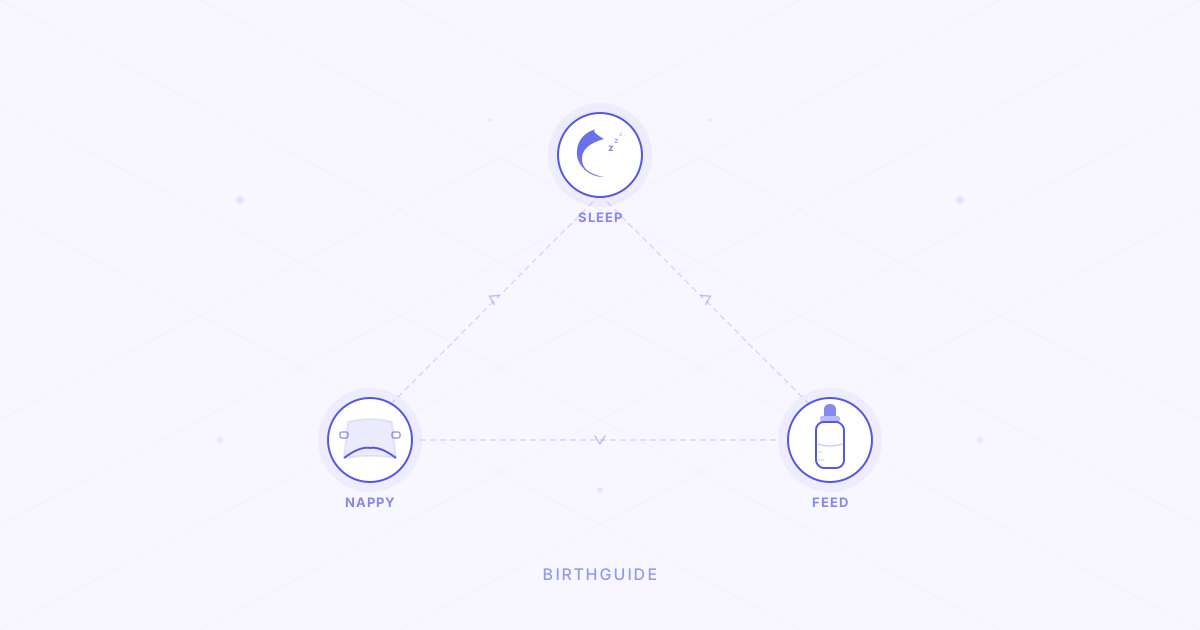
Your baby is only trying to tell you three things. They are hungry. They are tired. Or they need a nappy change. That is the entire list. For the first few months of your baby's life, almost every cry, every grizzle, every unsettled moment traces back to one of those three needs. Once you learn to read the cues, everything gets easier. The hard part is that sleep deprivation makes it difficult to keep track of when things last happened. And timing is everything.
The fourth trimester (and why it matters)
Before we get into the specifics, it helps to understand what your baby is going through.
The first 12 weeks after birth are sometimes called the fourth trimester. Your baby spent nine months in a warm, dark, noisy, snug environment where every need was met instantly. Now they are in a bright, open, quiet room and they have no idea what is happening.
Everything your newborn does in those first weeks is an attempt to recreate what they had in the womb. They want warmth, closeness, movement, and white noise. They want to be held. They want to feed frequently. This is not clingy behaviour. It is survival instinct, and it is completely normal. If you are still figuring out what to buy, our baby essentials price tracker compares prices across Australian retailers on the essentials.
Understanding this context makes the three cues easier to read. Your baby is not being difficult. They are adjusting to a world that feels nothing like the one they just left.
If you are still pregnant and thinking about what those first moments will look like, your birth plan is a good place to start. Preferences like skin-to-skin contact, delayed cord clamping, and immediate feeding all set the stage for how your baby transitions into the fourth trimester. BirthGuide walks you through these decisions so your partner and care team know exactly what you want.
Cue 1: Hunger
Most new parents wait for their baby to cry before offering a feed. By that point, your baby has been trying to tell you they are hungry for several minutes. Crying is a late hunger cue. It is the equivalent of shouting. And feeding a crying baby is harder because they are stressed, their tongue is up, and latching becomes a battle.
The early signs are subtle but consistent. Your baby will start bringing their hands to their mouth. They will turn their head side to side, rooting, looking for a breast or bottle. Their lips will move, almost like they are practising sucking. They might make small sounds, soft grunts or squeaks, before any real fussing starts.
If you catch these early cues, feeding is calmer for everyone. The latch is easier. Your baby feeds more efficiently. You are not trying to calm a screaming infant before you can even start.
How often will they feed?
In the first few weeks, expect to feed roughly every 2 to 3 hours, sometimes more. This is measured from the start of one feed to the start of the next, not from the end. So if a feed starts at 10am and takes 40 minutes, the next one might begin around 12 to 12:30pm. That gap can feel very short. It is.
The tricky part is remembering when the last feed started. At 3am, after your fourth wake-up, the feeds start running together. Was the last one at midnight or 1:30am? You genuinely will not remember. However you keep track of it, whether that is an app, a notepad, or a rubber band you swap between wrists, having something external to hold that information for you makes a real difference.
Cluster feeding is normal
In the first few weeks, your baby will have periods where they want to feed constantly. Sometimes every 30 to 45 minutes for several hours in a row, usually in the evening. This is called cluster feeding. It does not mean your milk supply is low. It does not mean something is wrong. It is how babies build milk supply and it usually settles by about six weeks.
If you are breastfeeding and worried about supply, count nappies instead of clock-watching. By day five, your baby should be producing at least six wet nappies in 24 hours. That is the most reliable indicator that they are getting enough.
Your birth plan can include your feeding preferences, whether you plan to breastfeed, formula feed, or use a combination. Having this written down means the midwives on shift know your plan without you having to explain it repeatedly at 3am. BirthGuide includes feeding preferences in your birth plan and flags them on your partner's labour cheat sheet too.
Cue 2: Tiredness
This is the one that catches most new parents off guard. And it is the one where timing matters most.
You would think a tired baby would just fall asleep. They do the opposite. An overtired baby fights sleep harder, cries more, and becomes almost impossible to settle.
The key concept is the wake window. This is the amount of time your baby can comfortably stay awake between naps before they become overtired. For newborns, this window is shockingly short.
Wake windows by age
From birth to about 6 weeks, your baby can stay awake for roughly 45 to 60 minutes. That includes feeding time. So if a feed takes 30 minutes, you have maybe 15 to 30 minutes before they need to sleep again.
From 6 to 12 weeks, the window stretches slightly to about 60 to 90 minutes.
From 3 to 4 months, you are looking at roughly 75 to 120 minutes.
These are averages. Your baby might run shorter or longer. But the pattern holds: newborns need far more sleep than most parents expect. A newborn in the first six weeks might sleep 14 to 17 hours in a 24-hour period, broken into short bursts.
Why 40 minutes changes everything
Here is the thing that nobody prepares you for. Forty minutes is nothing. It is one feed and a nappy change. It is a phone call with your mum. It is staring at the wall wondering what day it is. As an adult, you do not even register 40 minutes passing. But for your newborn, 40 minutes is the difference between drifting off peacefully and a full overtired meltdown.
This is where most of the "difficult baby" crying comes from. The baby is not difficult. The parent just did not realise the window had closed because, honestly, who notices 40 minutes?
Keeping track of when your baby last woke up is the single most impactful thing you can do in those early weeks. Glance at the clock when they wake, and start your wind-down routine before the window closes. However you track it, make sure you have something, because your internal clock will not be reliable on four hours of broken sleep.
Tired signs to watch for
Your baby's tired cues happen in stages, just like hunger cues. The early ones are easy to miss if you are not looking.
First, you will notice a zoned-out stare. Your baby looks away from you, from toys, from stimulation. They are disengaging. Then come the yawns, the jerky arm and leg movements, and clenching of fists. Rubbing eyes and ears comes next, though this is more common from about 8 weeks onwards.
If you miss those, the late signs arrive. Arching backwards, frantic crying, and the classic overtired meltdown where nothing works. At this point, settling them takes much longer and the nap is often shorter.
Putting it together
When your baby wakes from a nap, note the time. If your baby is under six weeks old, start your wind-down routine about 40 minutes later. Dim the lights, reduce noise, swaddle if that is your approach, and start gentle rocking or patting. You are aiming to begin the process before the window closes, not after. Not sure which swaddle to go with? We compared the most popular options in our price tracker.
Parents who stay ahead of wake windows consistently report calmer babies, longer naps, and less crying. It feels overly simple. It works.
Cue 3: Nappy
This one is more straightforward, but there are a few things worth knowing beyond "check if it is wet."
The first week is its own thing
In the first 24 to 48 hours, your baby will pass meconium. It is thick, dark green, almost black, and sticky. This is normal. Over the next few days, the stool transitions to a greenish brown, then to a mustard yellow colour with a seedy texture if breastfeeding, or a slightly firmer tan colour if formula feeding. This transition tells you that your baby's gut is working and they are digesting milk.
Nappy output tells you about feeding
By day five, you are looking for at least six wet nappies and three or more dirty nappies in 24 hours for a breastfed baby. Formula-fed babies may have fewer dirty nappies but should still hit the wet nappy count. If you are not hitting those numbers, talk to your midwife.
When your midwife or child health nurse asks how many wet nappies your baby had yesterday, you want a number, not a guess. Keeping a simple tally for the first two weeks, on your phone, on a piece of paper on the fridge, wherever, gives you that confidence. It also gives your care team something concrete to work with if anything needs adjusting.
When to call your midwife or GP
Most nappy changes are unremarkable. But there are a few things to watch for: blood in the stool (small streaks can be normal but should be mentioned), white or very pale stool (always mention this), diarrhoea lasting more than 24 hours, or significantly fewer wet nappies than usual. None of these are necessarily emergencies, but they are worth a phone call.
Beyond the triad: skin-to-skin
If the triad covers what your baby needs, skin-to-skin is how you deliver it.
Holding your baby against your bare chest helps regulate their temperature, steadies their heart rate, calms their breathing, and makes feeding easier. It works for both parents. It is not just a birth day thing. Skin-to-skin in the first weeks at home, during feeds, after a bath, or when your baby is unsettled, can be one of your most effective tools.
This is one reason why your birth plan matters beyond the delivery room. If your birth preferences include immediate skin-to-skin and your partner knows this is the plan, that first hour after birth sets the tone for everything that follows. Your BirthGuide birth plan includes these preferences and your partner's cheat sheet flags them as priority actions.
When something feels wrong
Most of what your baby does in the first weeks will trace back to the triad. But there are moments when something falls outside those three categories and your instincts tell you it is different.
Trust that instinct. Call your midwife, your GP, or your hospital's postnatal line if you notice any of the following: a temperature above 38 degrees, unusual lethargy where your baby is hard to wake for feeds, refusing multiple feeds in a row, a high-pitched or unusual cry that sounds different from their normal fussing, yellowing of the skin or eyes beyond what your midwife has said is normal, or fewer wet nappies than expected.
You will never be judged for calling. Midwives and GPs would rather hear from you ten times about nothing than miss the one time it matters.
The pattern that makes it click
Here is what a typical cycle looks like for a newborn under six weeks:
Baby wakes. You note the time. You feed them, watching for early hunger cues so you catch it before crying. The feed takes 20 to 40 minutes. You wind them, check the nappy, and maybe get 10 to 20 minutes of quiet awake time. Then you glance at the clock. About 45 to 60 minutes after they woke up, you start settling them for the next nap. They sleep for 20 minutes to 2 hours. Then it starts again.
That is the rhythm. Feed, awake time, sleep. Repeat. It sounds relentless because it is. But once you see the pattern, you stop wondering what your baby wants. You already know. And when you keep even a rough log of the times, you can see the pattern forming within a few days.
If you are still preparing for birth, thinking through your preferences now makes those first hours and days easier. Your partner reads the plan. Your midwife sees your preferences. You focus on your baby instead of explaining yourself.
It gets easier faster than you think
There will be moments in those early weeks when you feel like you will never figure this out. The feeds blur into each other. The naps feel random. The crying seems to come from nowhere.
It is not random. It just feels that way before the pattern clicks.
The triad gives you a framework. Three cues, not thirty. Hungry, tired, nappy. That is the whole list. And keeping track of the basics, even roughly, helps you spot the pattern faster than trying to hold it all in your head.
Your parents got here too. They did not have any of these tools. They had a few rough weeks, and then one morning they realised they could read their baby without thinking about it. That is exactly where you are heading. The only difference is that you have better ways to bridge the gap between chaos and instinct.
Most parents say it clicks somewhere around week three or four. The cues stop being something you look for and start being something you just see. And from that point on, you spend less time guessing and more time enjoying.
You will get there. Probably sooner than you expect.